
Have you ever walked into a room and forgotten why you went there? Or found yourself rereading the same sentence because your mind simply isn't feeling as sharp as usual?
Occasional forgetfulness and mental fatigue can happen to anyone. Stress, poor sleep, an unbalanced diet, and everyday demands can all influence how we feel and function.
But there is another area researchers have been paying increasing attention to: gut health.
The digestive system and brain are in constant communication through what scientists call the gut-brain axis. While research is still developing, scientists are investigating how the gut microbiome, immune system, nervous system, and microbial activity may interact with aspects of mood, stress, and cognitive wellness.
This doesn't mean that poor gut health directly causes memory problems. Instead, it highlights an interesting question:
Could supporting digestive wellness also be one part of a broader approach to healthy aging and brain health?
Let's take a closer look.
What Is the Gut-Brain Axis?
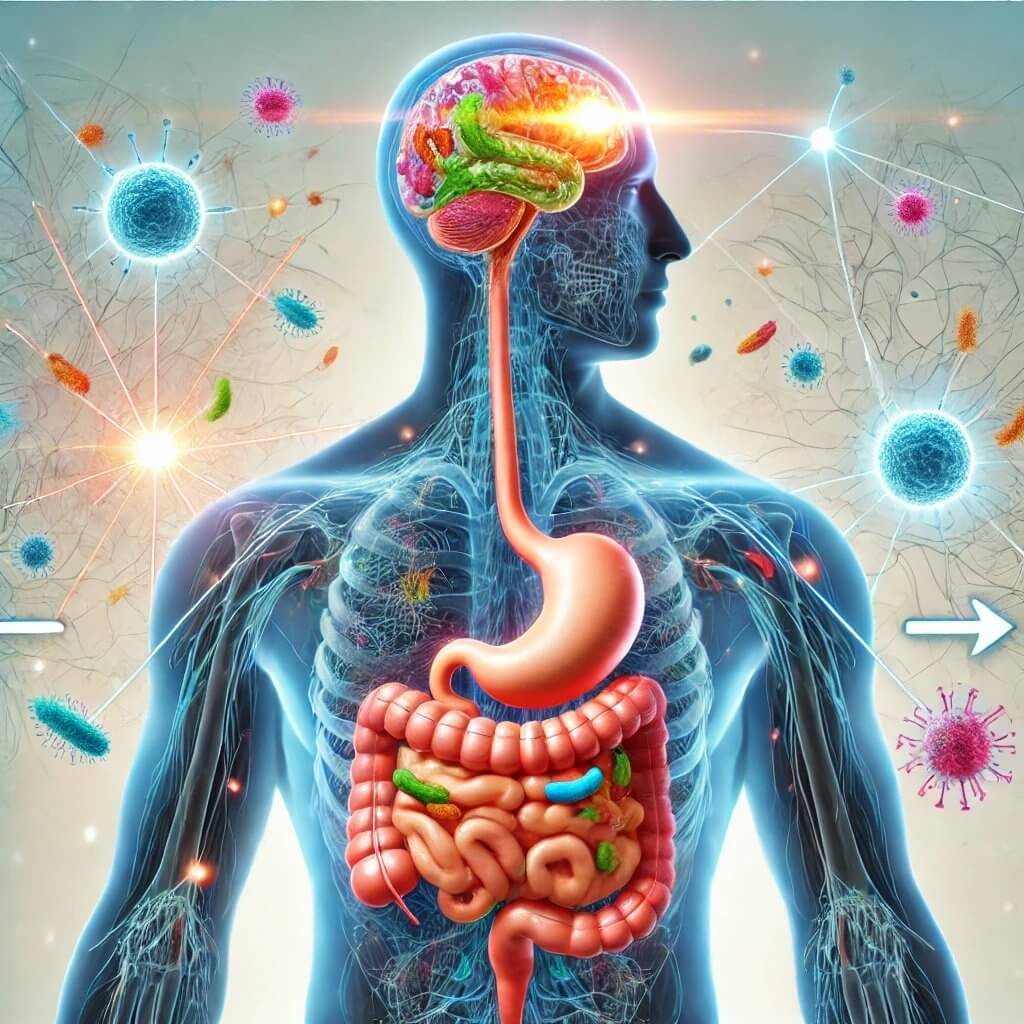
The gut-brain axis refers to the two-way communication network connecting the digestive system and the brain.
Think of it as an ongoing conversation rather than a one-way message.
The brain can influence digestion through signals related to stress and emotions. At the same time, activity in the digestive system can send signals back toward the brain.
Several systems are involved in this communication, including:
- The nervous system
- The immune system
- The gut microbiome
- Hormonal and metabolic pathways
- Microbial metabolites
- The vagus nerve
The vagus nerve is particularly interesting because it provides a major communication pathway between the digestive tract and the brain.
Meanwhile, the trillions of microorganisms living in the digestive tract produce various compounds that researchers are studying for their potential effects throughout the body.
This is why the gut-brain connection has become such an interesting area of scientific research.
However, it's important to separate established biology from emerging research. Scientists are still working to understand exactly how changes in the gut microbiome may relate to mood, stress, cognition, and other aspects of brain health.
Can Gut Health Affect Brain Health?
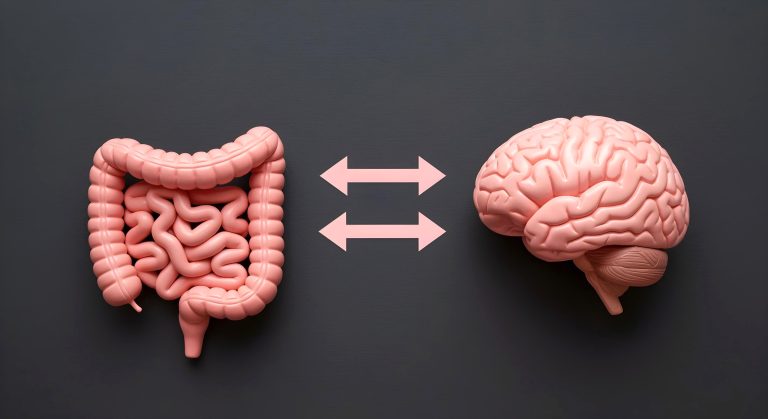
The relationship between gut health and brain health is more complicated than simply saying "a healthy gut equals a healthy brain."
Researchers are investigating several possible connections.
The Gut Microbiome
The gut microbiome is the community of microorganisms living throughout the digestive tract.
Its composition can vary considerably from person to person and may be influenced by factors such as diet, lifestyle, age, medications, and other environmental factors.
Researchers are interested in whether changes in the gut microbiome can influence biological pathways connected with brain function.
Inflammation and the Immune System
The digestive system plays an important role in the body's immune activity.
Because the immune system and gut are closely connected, researchers are studying whether gut-related processes can influence inflammatory signaling elsewhere in the body.
Inflammation is a complex biological process, so it would be an oversimplification to blame digestive health for cognitive problems.
Instead, scientists are exploring how these systems interact as part of overall health.
Stress and Mood
Most people have experienced the effect stress can have on digestion.
A stressful period may affect appetite, bowel habits, or digestive comfort. At the same time, signals from the digestive system can interact with pathways involved in stress and mood.
This two-way relationship is another reason the gut-brain axis has attracted scientific attention.
Microbial Metabolites
Gut microorganisms can produce metabolites as they interact with food and other substances in the digestive tract.
Some of these compounds are being studied for their potential role in communication between the gut and other systems in the body.
The science is promising in some areas but remains an active field of research.
So, while gut health and memory are increasingly discussed together, it is more accurate to say that researchers are investigating possible connections rather than claiming that digestive problems directly cause memory loss.
Curious about multi-strain probiotic support for digestive wellness?
Learn More About Youthful Digest→What Role Do Probiotics Play?
Probiotics are live microorganisms that, when consumed in adequate amounts, may provide health benefits.
They are commonly found in certain fermented foods and dietary supplements.
But there is an important point many people overlook:
Not all probiotics are the same.
Different probiotic strains can have different characteristics and have been studied for different purposes.
This means that results from research on one strain shouldn't automatically be applied to every probiotic product.
Probiotic research is also highly dependent on factors such as the specific strain, formulation, amount, duration of use, and the individual taking it.
For that reason, it's better to view probiotics as one potential component of digestive wellness rather than a guaranteed solution for a particular health concern.

Introducing Youthful Digest
For people interested in supporting their digestive wellness, Youthful Digest is a probiotic-focused dietary supplement designed around a multi-strain approach.
Rather than focusing on the idea that one ingredient can solve every wellness concern, the product is positioned as nutritional support for the gut.
That makes it relevant to people who are already paying more attention to the relationship between:
- Digestive health
- Gut microbiome wellness
- Healthy aging
- Overall nutrition
- Gut-brain wellness
It's important to keep expectations realistic.
Youthful Digest should not be viewed as a treatment for memory loss, dementia, anxiety, depression, or any other medical condition.
Instead, it can be considered as one possible addition to a broader wellness routine that includes nutritious food, regular movement, adequate sleep, stress management, and other healthy habits.
Review the current Youthful Digest formula and product details.
Explore Youthful Digest→What Makes Youthful Digest Different?
One feature of Youthful Digest's positioning is its multi-strain probiotic approach.
Why might multiple strains be used?
The digestive tract contains a diverse community of microorganisms rather than one single type of bacteria. Different probiotic strains may have different properties and have been studied independently.
A multi-strain formula may therefore be designed with the goal of providing broader digestive support than a single-strain approach.
However, "more strains" does not automatically mean "better."
The quality of a probiotic depends on much more than simply counting the number of strains listed on a label.
For anyone considering Youthful Digest, it is sensible to review the current product label and official product information to understand exactly which strains and amounts are included.
Because supplement formulations can change, readers should rely on the current product information rather than outdated descriptions.

What to Consider Before Trying a Probiotic
Adding a probiotic supplement is not a substitute for taking care of the basics.
Your everyday habits still matter.
1. Look at your overall diet
A varied diet containing fiber-rich foods, vegetables, fruits, whole grains, legumes, and other nutritious foods can be an important part of digestive wellness.
2. Be consistent
If you decide to try a dietary supplement, consistency is generally more useful than taking it occasionally and expecting immediate results.
Individual responses to probiotics can vary.
3. Don't expect overnight changes
Probiotics aren't designed to provide guaranteed changes in memory, focus, mood, or mental clarity.
Give your wellness routine time and pay attention to how your body responds.
4. Consider your complete lifestyle
Sleep, physical activity, hydration, nutrition, stress, and social connection can all contribute to healthy aging.
A probiotic should be viewed as one potential piece of that larger picture.
5. Talk with a healthcare professional when appropriate
If you have a medical condition, take medications, are pregnant or breastfeeding, have significant digestive symptoms, or are unsure whether a supplement is appropriate for you, speak with a qualified healthcare professional before starting it.
Want to see the current Youthful Digest offer and label details?
Check Youthful Digest Details→Youthful Digest: Is It Worth Considering?
Whether Youthful Digest is worth considering depends largely on what you're looking for.
Someone interested in a probiotic supplement for gut health may want to learn more about its multi-strain formulation and how it fits into their existing wellness routine.
It may be particularly interesting to adults who are already thinking more seriously about digestive wellness and healthy aging.
But it is important to approach any Youthful Digest review with realistic expectations.
A supplement isn't a replacement for medical care, and there is no responsible reason to promise that a probiotic will improve someone's memory or reverse cognitive changes.
The more sensible question is:
Does this type of nutritional support fit your personal approach to digestive and overall wellness?
That is something each person needs to decide based on their needs, preferences, and healthcare guidance.
The Bigger Picture: Gut Health and Healthy Aging
As we get older, health becomes less about looking for one magic solution and more about paying attention to several small factors consistently.
Digestive wellness is one of those factors.
The gut-brain connection provides an interesting reminder that different systems within the body don't operate independently. The digestive system, immune system, nervous system, and brain communicate through complex pathways that researchers are still working to understand.
That doesn't mean every memory lapse is related to the gut.
Sometimes you simply need better sleep.
Sometimes you're stressed.
Sometimes you're distracted.
And sometimes occasional forgetfulness is simply part of being human.
The goal isn't to blame one system. It's to look at the bigger picture.

Frequently Asked Questions
1. What is the gut-brain connection?
The gut-brain connection describes the two-way communication between the digestive system and brain. It involves the nervous system, immune system, gut microbiome, microbial metabolites, and other biological pathways.
2. Can gut health affect memory?
Researchers are investigating possible relationships between gut health, the gut microbiome, and cognitive function. However, current research does not justify saying that poor gut health directly causes memory loss.
3. What are probiotics?
Probiotics are live microorganisms that may provide health benefits when consumed in adequate amounts. Different probiotic strains can have different characteristics and research findings.
4. Are probiotics good for gut health?
Certain probiotic strains have been studied for digestive and other health outcomes. However, benefits can vary depending on the strain, formulation, individual, and other factors.
5. What is Youthful Digest?
Youthful Digest is a probiotic-focused dietary supplement positioned around digestive and gut wellness. Its formulation uses a multi-strain approach.
6. Can Youthful Digest improve memory?
Youthful Digest should not be presented as a treatment for memory problems or cognitive decline. Its positioning is nutritional and digestive support, while research into the gut-brain connection continues to develop.
7. How long does it take for probiotics to work?
There isn't one universal timeframe. Individual responses can vary depending on the probiotic, diet, lifestyle, and other factors.
8. Should everyone take a probiotic?
No. Dietary supplements aren't appropriate for everyone. People with medical conditions, those taking medications, pregnant individuals, or anyone with concerns should consult a healthcare professional before using a probiotic supplement.
Final Thoughts
The relationship between gut health and brain health is one of the more fascinating areas of modern wellness research.
The gut-brain axis shows that the digestive system and brain communicate through multiple biological pathways. Researchers are continuing to explore how the gut microbiome may relate to areas such as stress, mood, inflammation, and cognitive wellness.
But healthy aging isn't about finding one product that does everything.
It's about building a foundation that supports your overall wellbeing.
That may include nutritious food, regular physical activity, quality sleep, stress management, and, for some people, nutritional supplements.
Youthful Digest is one probiotic-focused option worth learning more about if digestive and gut-brain wellness are part of your health goals.
If you're curious about its formulation and whether it fits your routine, take a closer look at the current product information and make an informed decision based on your individual needs.
Ready to review Youthful Digest for yourself?
Learn More About Youthful Digest→Supplement Disclaimer
This content is for educational and informational purposes only and is not intended to diagnose, treat, cure, or prevent any disease or medical condition. Dietary supplements should not replace professional medical advice, diagnosis, or treatment.